
The City of Carpinteria invites residents to learn more and participate in the proposed updates to local assessment districts supporting landscaping, berm maintenance, and neighborhood improvements.
At its meeting on November 10, 2025, the Carpinteria City Council adopted Resolution No. 6421, establishing new procedures for compliance with Proposition 218 and Assembly Bill 2257. These procedures provide a consistent framework for managing current and future special benefit assessments within the City.
The Council also approved Resolutions No. 6422 and No. 6423, initiating proceedings to form the Carpinteria Landscape Maintenance District No. 2025-1, and Resolution No. 6424 and No. 6425, initiating proceedings to form the Carpinteria Coastal Berm Assessment District, and setting in motion a property-owner protest ballot proceeding in accordance with Proposition 218.
A recording of the Council Meeting from November 10, 2025 can be found in English here and Spanish here.
Para información en español, haga clic aquí.
Frequently Asked Questions
This page provides general information about the proposed Landscape Maintenance Assessment District and Beach Berm Assessment District currently undergoing the Proposition 218 process.
What is an Assessment District?
An assessment district is a financing tool authorized under California law and Proposition 218 that allows a city to fund specific public improvements and ongoing maintenance services that provide a special benefit to defined properties.
Unlike a general tax, which may be used for broad municipal purposes, an assessment must be directly tied to specific improvements or services that benefit the assessed properties. The amount charged to each parcel must be proportional to the benefit that parcel receives. This proportionality is analyzed and documented in a detailed Engineer’s Report prepared by an independent consultant and approved by a qualified assessment engineer.
Assessment revenues are collected annually on the property tax roll and are legally restricted. They may only be used for the improvements and services described in the Engineer’s Report for that district. Assessment revenue may not be used for general governmental purposes.
Which assessment districts are currently being considered?
The City is conducting a Proposition 218 ballot process for two districts:
Each district has its own Engineer’s Report, benefit analysis, and ballot.
Is this a one-time fee?
No. An assessment is an annual charge that appears as a line item on a property owner’s property tax bill.
The assessment funds ongoing maintenance and operational services that occur every year. As long as the defined services continue, the assessment remains in place unless modified through a future Proposition 218 process.
Will the assessment increase year after year?
It may increase over time, but only within the limits approved by property owners through the Proposition 218 process, and only when necessary to keep pace with actual service costs.
The proposed assessment structure includes authority for annual adjustments tied to the Consumer Price Index (CPI), within the minimum and maximum limits described in the Engineer’s Report.
CPI measures inflation and reflects changes in the cost of labor, materials, fuel, utilities, equipment, and contracted services. Because the services funded by the assessment, such as landscaping, tree maintenance, irrigation repair, and related operations, involve ongoing labor and materials, their costs generally increase gradually over time.
Including CPI adjustment authority allows the assessment to adjust incrementally to reflect those changing costs. However, CPI authority does not mean the assessment automatically increases every year.
Each year, the City compares the actual cost of providing the defined services to the revenue generated by the assessment. Adjustments are implemented only when necessary to maintain alignment between revenue and the actual cost of service delivery, and any adjustment must remain within the limits approved through the Proposition 218 process.
The maximum allowable assessment rate is adjusted annually under the approved formula. However, the actual assessment rate applied in any given fiscal year may be lower depending on the District’s adopted budget and service costs.
Any increase beyond the approved formula would require a new mailed notice and ballot proceeding under Proposition 218.
The purpose of including CPI authority is to promote long-term financial stability and predictability by allowing smaller, incremental adjustments over time rather than requiring significant increases after extended periods without adjustments.
How long does an assessment district last? Is there a sunset date?
Assessment districts typically do not include a sunset date. They remain in place to fund the defined services and improvements unless changed through a future legal process consistent with Proposition 218 requirements.
Because the services funded are ongoing in nature, the assessment structure is designed to continue as long as those services are provided. Any increase beyond the approved maximum formula would require a new Proposition 218 ballot proceeding.
Will the Landscape Maintenance Assessment pay to pave streets?
The Landscape Maintenance Assessment District does not directly fund general street paving programs or large-scale roadway reconstruction or rehabilitation projects.
The District funds eligible maintenance and repair activities tied to the defined District Improvements, including public landscaping, street trees, irrigation systems, trails, sidewalks, curbs, gutters, and related infrastructure. In limited circumstances, this may include repair of small, localized sections of pavement where damage is directly caused by public landscaping or public street trees. For example, if tree roots from a City-maintained street tree lift or damage a portion of pavement, repair of that specific area may be eligible as a maintenance-related activity consistent with the Engineer’s Report.
These activities are limited to maintenance and repair functions. They do not include full roadway reconstruction, major resurfacing, or capital pavement replacement projects.
Currently, because existing assessment levels do not fully cover the cost of these services, the City supplements the District using discretionary funds that could otherwise be allocated to other municipal programs and infrastructure priorities, including street pavement and capital improvement projects.
If the updated assessment passes and revenues more closely align with the actual cost of service delivery, it would reduce or eliminate the need for ongoing subsidies from those other funding sources. This would increase the City Council’s flexibility during future budget deliberations to allocate discretionary funds to other priorities, which may include street pavement and infrastructure improvements. Any such funding decisions would remain subject to future City Council approval through the annual budget process.
Is this a new fee, or are property owners already paying something now?
Property owners are already paying existing assessments that were established in the 1990s.
The current Proposition 218 process addresses updating the assessment amounts to reflect current service costs. If approved, the updated assessment would replace the prior amount rather than being added on top of it. It does not create a second assessment for the same services.
If the assessment passes, will property owners pay both the old amount and the new amount?
No. If approved, the updated assessment replaces the existing assessment amount on the tax bill. It does not add an additional charge for the same services. Property owners would not pay both at the same time.
Why are assessments tied to property owners, and why do property owners vote?
Under Proposition 218, assessments must be based on special benefit to property. The voting process is therefore conducted with property owners whose parcels are being assessed.
Ballots are weighted in proportion to each parcel’s financial obligation. A majority protest exists if ballots submitted in opposition exceed ballots submitted in favor, weighted by the proportional financial obligation assigned to each parcel. While renters and other residents may benefit indirectly from maintained public areas, the legal framework ties the assessment obligation and voting rights to property ownership.
What happens if the assessment does not pass?
If the updated assessment does not pass, the City would continue collecting the existing assessment amount that was previously approved.
Because current service costs exceed the revenue generated by the older assessment levels, the difference would continue to require subsidy from discretionary funding sources. The City Council would then need to determine whether to continue that subsidy or reduce service levels over time. The City cannot impose the proposed increased assessment without property owner approval.
What will residents see in town if the assessment passes or does not pass?
If the updated assessment passes, revenues would better align with the actual cost of delivering the defined services. This supports continued maintenance of public landscaping, street trees, trails, irrigation systems, and related facilities consistent with the service levels described in the Engineer’s Report.
If the updated assessment does not pass, the City Council would face ongoing funding decisions. Current service costs exceed existing assessment revenues, and the difference would continue to require subsidy from limited discretionary funds. Over time, that could affect the frequency and responsiveness of maintenance activities or require the reallocation of funding from other City priorities.
How can a property owner see what they are paying now?
The current assessment amount appears as a separate line item on the annual property tax bill.
Property owners who have questions about their parcel classification or assessment amount may contact the City for assistance.
Where can I find more detailed information?
The Engineer’s Reports, fact sheets, and presentation materials are available on this webpage. Copies are also available for review at City Hall during regular business hours.
Property owners may also contact the City directly with questions about their parcel, ballot, or assessment calculation. Contact information, including phone numbers and email addresses, is listed on the City’s website and on the mailed ballot materials.
Landscape Maintenance District
Landscape Maintenance District Information
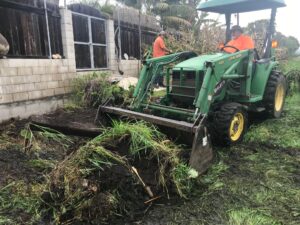 Through the City of Carpinteria’s Landscape Maintenance District (LMD), the City continually provides a wide array of landscaping services that works to reduce wildfire risk through brush, weed, and other fuels management.
Funding generated by this City assessment helps: 1) prevent trash, litter and debris from accumulating in landscaped areas of Carpinteria, which may enter storm drains and end up in coastal waters and on beaches; 2) maintain landscaping of city medians, parkways, sidewalks and other public spaces; and 3) maintain trees on city streets, medians and other public spaces within the assessment district.
Our Challenges:
With the support of our community, the original Landscape Maintenance District was established in 1996 (nearly 30 years ago). However, since that time, assessment rates have not been increased, while the costs associated with providing these services have increased by 480%, resulting in a growing funding deficit for the services provided by the Landscape Maintenance District.
Over the years, the City has subsidized funds from its General Fund budget to fill the gap in funding for the Landscape Maintenance District. The City projects that in the next several years it may have to reduce the available city budget by over a million dollars annually to continue supporting the underfunded Landscape Maintenance District. This could result in reductions to services, including public safety, street maintenance, parks, and recreational programs.
To help ensure continued financial support for the City’s Landscape Maintenance District, the City of Carpinteria needs additional funding.
- FACT: Assessment rates and revenues have remained flat since 1996 when the local minimum wage was $6.50/hour and the cost of gas was less than $2.00/gallon (on average). Costs have risen significantly since then, and despite the City reducing other services to cover these costs, the City still projects a budget shortfall in the coming years.
- FACT: Public landscaping services include maintenance and irrigation of trees, plants, shrubs, hedges, and other groundcover. These services also include removing landscaping debris from City drainage systems, maintenance of sidewalks and bikeways, and weed and graffiti abatement.
- FACT: The City currently supports landscaping services for approximately 184 acres of public land, not including parks. The Coastal Vista Trail and the Santa Monica Creek Trail are some of the larger areas where the City manages landscaping services.
- FACT: Safe, clean and well-maintained public landscaping along streets, trails, and public parking areas help maintain quality of life and make our community a desirable place to live.
Identified Solution:
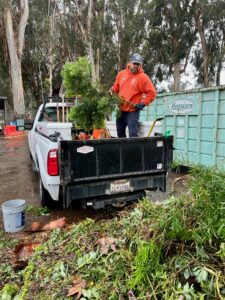
To continue the maintenance, operation and servicing of landscaped areas that directly benefit assessed parcels within the City of Carpinteria, the City is proposing the formation of an updated Landscape Maintenance District in compliance with Proposition 218.
What the updated Landscape Maintenance District proposes to fund:
- Continued maintenance to help reduce wildfire risk through brush, weed and other fuels management and abatement in landscaped public areas within the district.
- Continued maintenance to help prevent trash, litter and debris from accumulating in landscaped areas, which may enter storm drains and end up in coastal waters and on beaches.
- Continued landscaping maintenance/servicing of street trees, landscaped medians, parkways, sidewalks and other public spaces that provide a direct and proportional benefit to properties within the district.
Proposition 218 Ballot Proceeding:
California’s Proposition 218 (the Taxpayers Right to Vote on Taxes Act), which was approved by voters across the state in 1996 as an amendment to the California Constitution, requires a “mail ballot proceeding” among local property owners (not registered voters) for any proposed new or increased assessment. If the proposed assessment is approved, it would replace the existing assessment that was established in 1996.
The assessment also includes accountability requirements so that funds are used as promised, with public disclosure of all spending and annual independent audits which will be available online. No funds from this assessment would go to the City’s General Fund.
A YES vote means:
- The updated Landscape Maintenance District would replace the existing district and reflect the actual cost of providing landscaping and street-tree services.
- Updated assessments would fund ongoing maintenance of street trees, landscaped medians, parkways, sidewalks, & other public landscaped areas that directly benefit properties within the district.
- The Landscape Maintenance District would have a sustainable, dedicated funding source, and the City would no longer need to use General Fund resources to subsidize District operations.
- Maintenance activities would continue to address brush, weeds, trash, litter, and other debris in landscaped public areas, which helps to reduce fire risk and prevent materials from entering storm drains, coastal waters, and beaches.
A NO vote means:
- The existing District will remain in place and the assessment amount collected (established in 1996) will not reflect the actual cost of providing landscaping and street-tree services.
- Assessment revenues will continue to be insufficient to fund the ongoing maintenance of street trees, landscaped medians, parkways, sidewalks, & other public landscaped areas that benefit properties within the District.
- The District will not have a sustainable funding source, and the City will need to continue using General Fund resources to subsidize the District, reducing funds available for other City services.
Winter Berm District
Winter Berm District Information
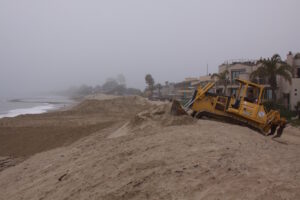 Every year through the City of Carpinteria Winter Protection Berm Assessment District No. 5, the City constructs a berm to help protect public and private property from high tides and winter storms. The berm helps preserve the integrity of the homes and businesses that are near the shore. The berm is typically built in October or November and dismantled the following March every year.
Our Challenge:
With the support of our community, the Winter Berm District was established in 1992 (33 years ago). However, since that time, assessment rates have not been increased, while construction, maintenance, management, contingency, and emergency response costs have increased by 275% (from $25,300 in 1992 to $94,771 in 2025).
As a result, the City has subsidized funding for the Winter Berm with its General Fund to fill the gap in funding. The City projects that in the next several years it may have to reduce the available City budget to continue supporting the underfunded Winter Berm District. This could result in reductions to other City services, including public safety, street maintenance, parks, and recreational programs.
To help ensure continued financial support for the berm’s annual construction, expand the existing Winter Berm District to include all at risk properties, and avoid reductions to other services, the City of Carpinteria needs additional funding.
-
- FACT: Prior to 1992, frequent winter storm surges (or floods) caused significant property damage to parcels along the ocean front of the city. The damage spurred the City of Carpinteria and property owners to invest in the berm in order to provide protection from high tides and storm surges during the winter months.
- FACT: Since 1992, the Berm has protected homes and businesses near the ocean front from countless storms, saving property owners costs for repairs and renovations.
- FACT: In 2023, a strong storm caused a minor breach in the berm. Additional investment in our winter berm is needed to help prevent future breaches like the one we saw in 2023.
- FACT: Winter storms are becoming more severe and unpredictable. With increasing variability in winter storms, additional funding is needed to better protect properties nearest Carpinteria City Beach.
- FACT: The berm helps protect property values and provides potential reductions in flood insurance premiums.
 Identified Solution:
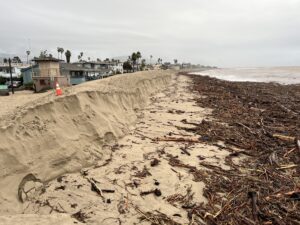
The berm program consists of seasonal construction and removal of an earthen berm approximately 1,375 feet in length along the Carpinteria City Beach. Once constructed, the berm must be monitored, maintained, and repaired during the winter storm season to ensure that it provides reliable protection.
Emergency response activities are often required during significant weather events to reinforce the structure of the berm and prevent overtopping or erosion. In addition to physical construction and maintenance, the berm program requires administrative oversight, compliance with legal noticing and reporting obligations, and the management of contractual and budgetary responsibilities. A contingency allocation is also necessary to address unforeseen events such as unusually severe storms.
To appropriately fund the continued yearly construction, maintenance, management, contingency, and emergency response of the berm, the City of Carpinteria is considering the formation of a replacement assessment district — the Carpinteria Coastal Berm Assessment District — which requires a Proposition 218 ballot proceeding. The replacement District would establish updated assessments that more accurately reflect current costs and ensure long-term program sustainability. Formation of the new Coastal Berm Assessment District would replace the existing Winter Berm District beginning in Fiscal Year 2026/27. This proposal would not expand the berm or change its footprint. All costs associated with berm construction, maintenance, and emergency response would be consolidated into a single, updated assessment.
California Proposition 218 (the “Taxpayers Right to Vote on Taxes Act”), which was approved by voters across the state in 1996 as an amendment to the California Constitution, requires a mail ballot proceeding among local property owners (not registered voters) for any proposed new or increased assessment. Formation of an updated Winter Protection Berm Assessment District will be conducted according to the requirements established by Proposition 218, including providing all property owners located within the district the opportunity to vote on the proposed assessment. For example, ballot and notice will be mailed to all property owners who would be asked to pay the proposed assessment for the Coastal Berm Assessment District No. 5. If the proposed assessment is approved, it would replace the existing assessment that was established in 1992. The replacement District would establish updated assessments that more accurately reflect current costs and ensure long-term program sustainability. If the proposed ballot proceeding to replace the existing Winter Protection Berm Assessment District passed, the proposed maximum assessment (Rate per Equivalent Benefit Unit) would be $235.42/ per year (or $19.62/ per month), with an annual adjustment provision equal to the greater of 3% or the percentage change in the Consumer Price Index for All Urban Consumers, not to exceed 6%.
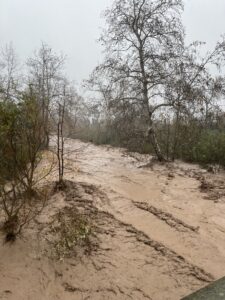 Without the improvements, the adjacent neighborhoods and properties (subject parcels) face a substantially higher risk of flooding, structural damage, erosion, and associated financial losses. By contrast, the presence of the berm directly mitigates that exposure, resulting in tangible, parcel-specific advantages, including:
- Reduced risk of property damage and associated repair or replacement costs due to storm-driven wave action and coastal flooding;
- Lower likelihood of personal financial losses, business interruption, or displacement resulting from flood events;
- Potential reductions in flood insurance premiums, where applicable, due to demonstrated flood protection measures in place; and
- Preservation or enhancement of long-term property value as a result of improved site stability and reduced hazard designation.
By law, funds from this assessment can only be used to provide services within the Coastal Berm Assessment District boundaries. No funds from this assessment would go to the City’s General Fund. The budget for maintenance and services funded by this assessment would be provided to the public annually.
A YES vote means:
- The existing Winter Berm District would be replaced beginning in Fiscal Year 2026/27.
- Updated assessments would fund annual berm construction, maintenance, management, and emergency response based on current costs.
- There would be a dedicated funding source for
berm operations without relying on
General Fund resources. - The berm program could continue operating at current levels to help protect homes, businesses, and infrastructure during winter storms.
A NO vote means:
- The existing Winter Berm District would remain in place with its 1992 assessment levels.
- Assessment revenues would remain insufficient to cover annual berm construction and emergency response costs.
- The berm program would continue to be subsidized by the General Fund, reducing
funds available for other City services such as public safety, street maintenance, parks,
and recreation.
Stay Informed: Learn About Assessment District Updates in Carpinteria
Join us to learn more and share your questions about the proposed updates to the Winter Berm and Landscape Maintenance districts. During the events, you can expect to learn more about what assessment districts are and how they work, how funds would be used to support local improvements, and how residents can stay informed.
- Town Hall with City Staff – Monday, November 17 at 6:00 PM
City Council Chambers, 5775 Carpinteria Ave
Residents may attend in person or via Zoom.
The recording of the town hall is available in English here and Spanish here. - Q&A with Councilmember Al Clark – Wednesday, November 19 at 5:30 PM
Pizza Man Dan’s, 699 Linden Ave - Q&A with Vice Mayor Mónica Solórzano – Tuesday, November 25 at 6:00 PM
Delgado’s Mexican Restaurant, 4991 Carpinteria Ave - Q&A with Mayor Natalia Alarcon – Monday, December 8 at 10:00 AM
Carp Moon Café, 4401 Carpinteria Ave - Q&A with Councilmember Julia Mayer – Wednesday, December 10 at 6:00 PM
Canalino Elementary School Auditorium, 1480 Linden Ave - Q&A with Councilmember Wade Nomura – Thursday, December 18 at 6:00 PM
City Council Chambers, 5775 Carpinteria Ave
 © 2026 City of Carpinteria. All Rights Reserved.